
Bed bugs have a way of making people uneasy the moment they are suspected. You may notice an unexplained mark on your skin, a tiny dark spot on the sheets, or an insect near the mattress and immediately wonder whether bed bugs have moved into your home.
The difficult part is that bed bugs are good at staying out of sight. They spend much of their time tucked into seams, cracks, furniture, bed frames, and other protected spaces, often becoming noticeable only after the population has had time to grow.
Bed bugs can happen in clean homes, hotels, apartments, dorms, and other places where people live or spend time. They are skilled hitchhikers and can be carried from one location to another on luggage, clothing, furniture, boxes, and personal belongings.
If you think you may have bed bugs, the most important first step is confirming what you are dealing with. Heritage Pest Management specializes in bed bug detection, treatment, and follow-up. Get a Free Quote if you are seeing signs of activity in your home.
What Are Bed Bugs and Why Are They So Hard to Find?
Bed bugs are small, flat insects that feed on blood. Adult bed bugs are visible to the naked eye, but their size, shape, and behavior make them easy to overlook, especially during the early stages of an infestation.
They tend to stay hidden when they are not feeding. Their flattened bodies allow them to fit into narrow cracks and seams around beds, furniture, baseboards, and other areas where they can remain close to people without being easily noticed.
That hidden behavior is one of the reasons a bed bug problem can be difficult to identify from a single clue. Looking for several signs together is much more useful than relying on bites alone.
What Do Bed Bugs Look Like?
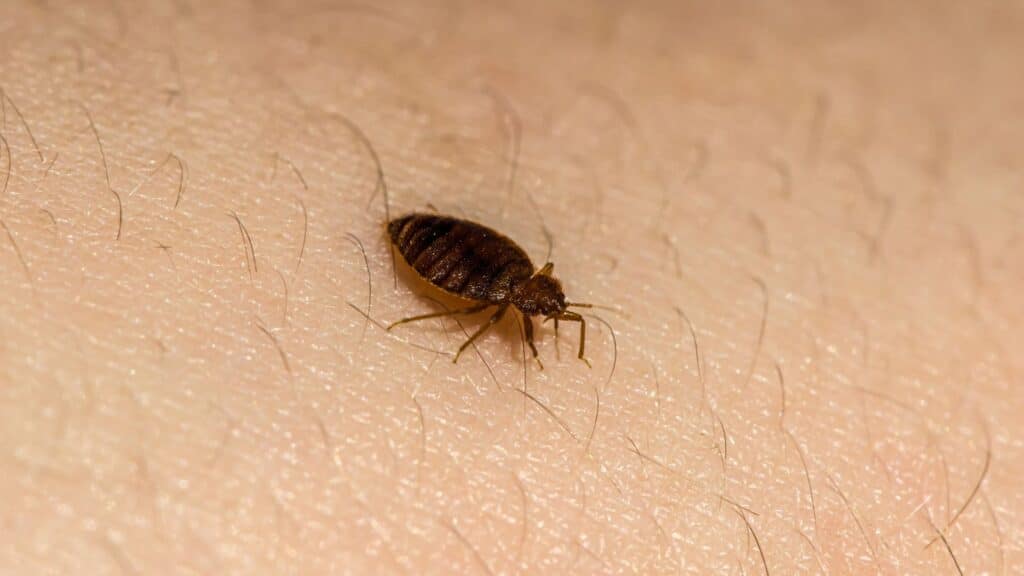
Adult bed bugs are generally reddish-brown, oval, and flattened when they have not recently fed. They are often compared in size and shape to an apple seed, although younger bed bugs are smaller and lighter in color.
Bed bugs do not have wings and cannot fly. They also do not jump like fleas. Instead, they crawl and hide in protected spaces near areas where people sleep or rest.
Eggs and very young bed bugs can be much harder to see, which is another reason a visual inspection should involve more than simply looking for adult insects.
Where Do Bed Bugs Usually Hide?
The name can be misleading because bed bugs do not live only in beds. They often begin around sleeping areas because that keeps them close to a dependable host, but they can hide in many parts of a room.
Common hiding places include mattress seams, box springs, bed frames, headboards, upholstered furniture, baseboards, cracks, furniture joints, and areas behind or beneath nearby objects.
As an infestation grows, activity may spread farther from the bed and into additional furniture, wall openings, adjoining rooms, or other protected areas.
How Do Bed Bugs Get Into a Home?
Bed bugs are often described as hitchhikers because they usually reach a new location by being carried there. They do not need an unsanitary home to survive, and having bed bugs is not an indication that someone has failed to keep their house clean.
Travel is one common way bed bugs move. A bug can hide in luggage, a backpack, clothing, or another personal item and be carried home from a hotel, rental property, dorm, or another location.
Used furniture can also provide transportation. Mattresses, bed frames, sofas, chairs, and other secondhand items may contain bed bugs or eggs that are difficult to notice during a quick inspection.
In apartments and other multi-family properties, the situation can become more complicated because bed bugs may move between neighboring spaces or be transported through shared areas and belongings. Heritage also provides pest-management services for multi-family and commercial properties.
Does Having Bed Bugs Mean Your Home Is Dirty?
No. Bed bugs are not attracted to dirt in the way people sometimes assume. They are looking for a host and protected places to hide.
A clean home can develop a bed bug infestation just as a cluttered home can. Clutter can make the problem harder to detect and treat because it creates additional hiding places, but cleanliness itself does not determine whether bed bugs are introduced into a property.
This distinction matters because people sometimes delay asking for help out of embarrassment. Bed bugs are a pest problem, not a reflection of how someone keeps their home.
What Are the Signs of a Bed Bug Infestation?
Seeing a live bed bug is the clearest sign, but it is not the only thing to look for. Because bed bugs spend so much time concealed, other physical evidence may appear before you actually see an insect moving around.
When checking a sleeping area, look carefully rather than relying on one symptom. Mattress seams, box springs, bed frames, headboards, upholstered furniture, and nearby cracks are particularly important places to inspect.
Dark or Rust-Colored Spots
Small dark spots may appear around mattress seams, bedding, furniture, or other areas where bed bugs are active. Rusty or reddish stains can also occur when a bed bug is crushed on bedding or another surface.
One isolated stain does not prove that bed bugs are present, but multiple signs in common hiding areas deserve closer attention.
Shed Skins and Eggs
Young bed bugs shed their outer skin as they grow. These pale shed skins may collect near hiding areas along with eggs, eggshells, or other evidence of activity.
Because eggs and young bed bugs are very small, they can be difficult to identify without a careful inspection.
Live Bed Bugs
Bed bugs may occasionally be found crawling on bedding, mattresses, walls, furniture, or other nearby surfaces. Finding a suspected insect can be useful because proper identification removes much of the uncertainty about what is causing the problem.
If possible, avoid crushing a suspected specimen before it can be identified. Correct identification matters because other small household insects can sometimes be mistaken for bed bugs.
What About Bed Bug Bites?
Bites can be a reason to investigate, but they are not a reliable way to confirm bed bugs on their own. People react differently to bites. Some develop itchy marks, while others may have little or no visible reaction.
Skin irritation can also have many other causes. Instead of diagnosing a bed bug problem from a bite pattern alone, look for physical evidence around the sleeping area.
DON’T JUST LOOK FOR BITES.
LOOK FOR THE SIGNS.
Where Should You Check for Bed Bugs?
If you suspect bed bugs, begin where people spend long periods sleeping or resting. Bed bugs generally prefer hiding locations that allow them to stay protected while remaining relatively close to a host.
A flashlight can make it easier to inspect seams, cracks, joints, and other tight spaces. Move slowly and look for insects as well as dark spotting, shed skins, eggs, or other unusual evidence.
Start With the Mattress and Box Spring
Look closely along mattress seams, piping, labels, tufts, and folds. Check the edges and underside of the mattress and inspect accessible portions of the box spring.
Do not assume that a clean-looking sleeping surface means the area is clear. Bed bugs tend to choose narrow, protected spaces rather than remaining exposed on top of a mattress.
Check the Bed Frame and Headboard
Bed frames and headboards provide numerous joints, screw holes, cracks, and connection points where bed bugs may hide. Areas where the frame meets the wall or other furniture deserve particular attention.
If the bed is positioned directly against a wall, activity may also extend to nearby baseboards, trim, wall openings, or objects beside the bed.
Look Beyond the Bed
Bed bugs can also hide in nightstands, upholstered chairs, sofas, curtains, baseboards, furniture seams, and other protected areas. As an infestation becomes more established, the number of possible hiding locations increases.
This is why treating only the mattress may not solve the problem. A successful approach has to account for where bed bugs may be hiding throughout the affected area.
Can Bed Bugs Spread From One Room to Another?
Yes. Bed bugs can spread beyond the room where they are first discovered. They may crawl into nearby hiding places or be moved around the property in bedding, clothing, furniture, bags, boxes, and other belongings.
Moving items out of an affected room without a plan can unintentionally carry bed bugs into another part of the house. The same concern applies when discarding mattresses or furniture through hallways and shared areas.
Multi-family environments can present an additional challenge because adjoining units and shared spaces may need to be considered when determining the extent of an infestation.

Can You Get Rid of Bed Bugs Yourself?
Bed bugs are considered one of the more difficult household pests to eliminate. Their ability to hide in very small spaces, their life cycle, and resistance to some pesticides can make a quick do-it-yourself solution unreliable.
Vacuuming, reducing clutter, laundering appropriate items, and using high heat in a clothes dryer can all play a role in managing an infestation, but these measures do not necessarily reach every bug or egg throughout the property.
Randomly spraying visible areas can also leave hidden activity untouched. Bed bug control is generally more effective when several methods are used together and the entire affected area is considered.
Should You Throw Away Your Mattress?
Not automatically. Discovering bed bugs does not mean every mattress, sofa, or piece of furniture has to be discarded.
Removing furniture without understanding the extent of the infestation can become expensive and may spread bed bugs while items are being carried through the home. Many belongings can be incorporated into a professional treatment plan rather than immediately thrown away.
If an item truly needs to be removed, ask your pest-control professional how it should be handled before moving it through the property.
How Can You Reduce the Risk of Bringing Bed Bugs Home?
It is impossible to guarantee that you will never encounter a bed bug, but a few habits can reduce the chance of accidentally carrying them into your home.
Travel deserves particular attention. When staying away from home, keep luggage away from beds and upholstered furniture until you have checked the room. Inspect the mattress and headboard area for obvious signs of bed bugs, and examine luggage again when you return home.
Secondhand furniture should also be inspected carefully before it enters the house. A sofa or bed frame can look perfectly normal while still providing numerous concealed hiding places.
Reducing unnecessary clutter at home can also help. Clutter does not cause bed bugs, but fewer hiding places make activity easier to detect and can make treatment more manageable if an infestation occurs.
When Should You Call a Pest Control Professional for Bed Bugs?
If you find a live bed bug, discover several physical signs around a sleeping area, or continue waking up with unexplained bites while finding suspicious evidence nearby, professional identification is a sensible next step.
Early detection can make a meaningful difference. Bed bugs reproduce and spread, so waiting until the problem is obvious in several rooms can make the infestation more difficult to address.
Professional help is also useful when you are uncertain whether the insect you found is actually a bed bug. Correct identification prevents time and money from being spent treating the wrong pest.
How Heritage Pest Management Helps With Bed Bugs
Bed bug control is one of Heritage Pest Management’s specialized pest-control services. Heritage has experience with bed bug detection, treatment, and follow-up, allowing the team to approach the problem as more than a single visible-insect treatment.
The appropriate treatment depends on the property and the extent of the infestation. Identifying affected areas and following through after treatment are important parts of getting the problem under control.
Heritage also provides bed bug services for multi-family properties, where early detection and coordinated treatment can be particularly important.
Think you may have bed bugs? Request a free quote from Heritage Pest Management.
Frequently Asked Questions About Bed Bugs
Bed bugs create a lot of questions, especially when you are not sure whether the signs you are seeing point to an active infestation. Here are answers to some of the most common concerns.
What is the first sign of bed bugs?
There is no single first sign for every infestation. Some people notice a live insect, while others find dark spotting, rusty stains, shed skins, eggs, or unexplained bites. Physical evidence around mattresses, bed frames, furniture, and nearby hiding areas is more reliable than bites alone.
Are bed bugs caused by a dirty home?
No. Bed bugs can be introduced into clean or cluttered homes. They are attracted to hosts rather than dirt. Clutter can provide additional hiding places and make an infestation harder to locate and treat, but it does not cause bed bugs.
Can you see bed bugs with the naked eye?
Yes. Adult bed bugs are visible without magnification and are often described as being similar in size and shape to an apple seed. Young bed bugs and eggs are considerably smaller and can be more difficult to spot.
Can bed bugs fly or jump?
No. Bed bugs do not fly or jump. They crawl between hiding places and feeding areas and are frequently carried from one location to another on luggage, clothing, furniture, boxes, and other belongings.
Are bites enough to confirm that I have bed bugs?
No. People react differently to bed bug bites, and similar skin irritation can have other causes. Look for physical evidence such as live bugs, dark spotting, shed skins, eggs, or rusty stains around common hiding places before assuming bed bugs are responsible.
Where do bed bugs hide during the day?
Bed bugs often hide in mattress seams, box springs, bed frames, headboards, furniture joints, upholstered furniture, baseboards, cracks, and other protected spaces close to where people sleep or rest.
Do I need to throw away my mattress if I have bed bugs?
Not necessarily. Many mattresses and other belongings can be treated or managed as part of a bed bug control plan. Moving or discarding furniture without a plan can potentially spread bed bugs to other areas, so talk with a pest-control professional before removing large items.
Can bed bugs spread between apartments?
Yes. Bed bugs can move into neighboring areas or be transported between units on belongings, furniture, clothing, and other items. If bed bugs are found in a multi-family property, early reporting and coordinated management can help reduce further spread.
Bed Bug Prevention and Detection Checklist
You cannot eliminate every chance of encountering bed bugs, but these practical habits can help with prevention and early detection:
- Inspect mattresses, headboards, and sleeping areas when traveling.
- Keep luggage off hotel beds and upholstered furniture when possible.
- Check luggage and belongings carefully after returning from a trip.
- Inspect secondhand beds, sofas, chairs, and furniture before bringing them indoors.
- Reduce unnecessary clutter that can create additional hiding places.
- Wash and heat-dry appropriate bedding and clothing when bed bug exposure is suspected.
- Check mattress seams, bed frames, and nearby furniture if unexplained signs appear.
- Do not rely on bites alone to identify a bed bug infestation.
- Avoid moving potentially infested belongings from room to room without a plan.
- Seek professional identification when you are unsure what pest you have found.
Finding bed bugs early can make the problem easier to address. If you discover live insects or several signs of activity, avoid waiting for the infestation to become more widespread.
Think You Have Bed Bugs?
You do not have to spend night after night wondering what is hiding around your bed.
Heritage Pest Management specializes in bed bug detection, treatment, and follow-up for Alabama homes. The goal is to identify the problem, understand where activity is occurring, and take an appropriate approach based on the property and infestation.
If you have found a suspected bed bug or are seeing signs that keep returning, let Heritage take a closer look.